Protect the investment before it goes live.
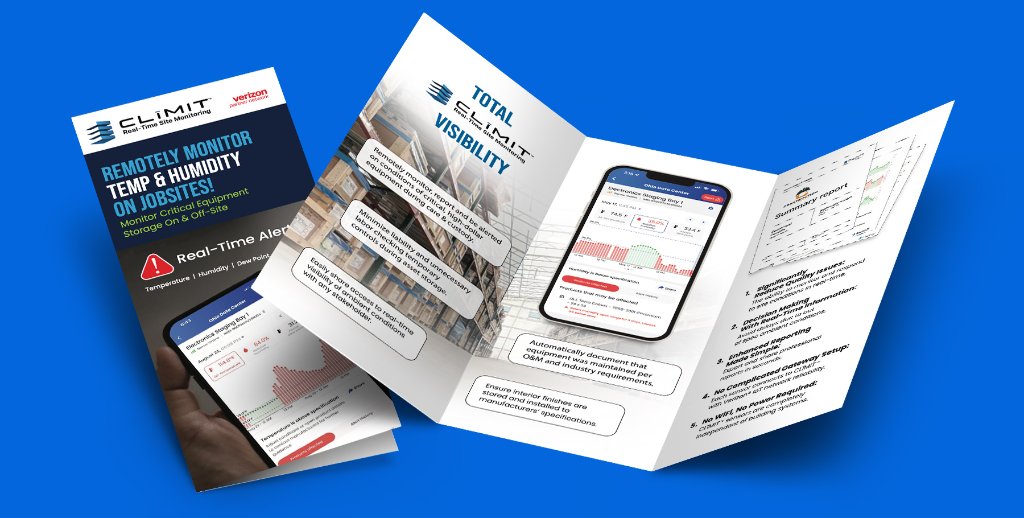
Data center construction involves hundreds of millions of dollars in sensitive equipment, installed into a live construction environment. CLīMIT monitors temperature, humidity, and dew point continuously, so environmental risk never catches you off guard.
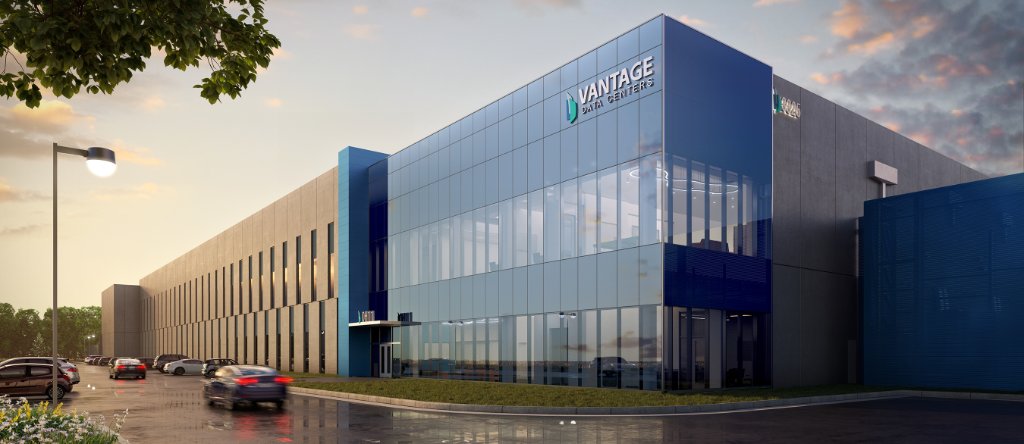
Vantage Data Centers - Johnstown, OH
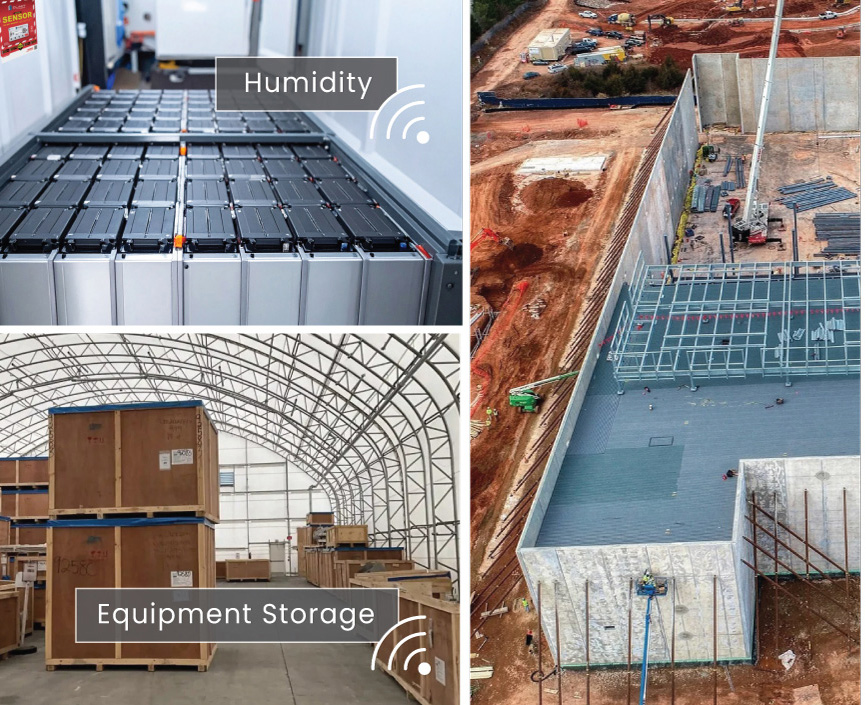
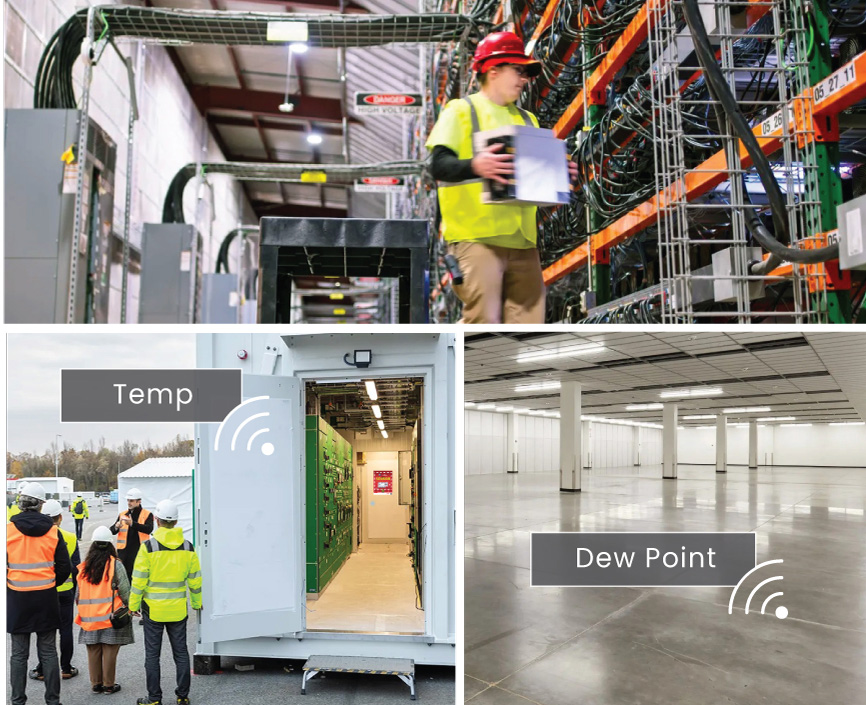
Construction sites and data center
equipment don't mix well.
The gap between "building complete" and "IT equipment installed" is the highest-risk window of any data center project. Most environmental damage happens here, quietly, invisibly, and expensively.
Equipment Damage Before Day One
Data center hardware, including servers, switching equipment, UPS systems, and cooling infrastructure, has strict environmental tolerances. Exposure to excess humidity, temperature swings, or condensation during construction can cause corrosion, static discharge, and internal damage that only manifests after commissioning. By then, it's too late to make a warranty claim.
Moisture & Condensation Risk
Construction sites are inherently wet environments. Concrete curing, HVAC commissioning, and weather infiltration all introduce moisture. If relative humidity or dew point conditions aren't monitored continuously, condensation can form on sensitive electronics, busbars, and cable pathways invisibly and without warning.
Temperature Extremes During Build-Out
Before permanent HVAC systems are operational, data center spaces are exposed to extreme temperature swings, from freezing winter conditions to heat buildup from construction activity. These swings affect materials, adhesives, raised flooring systems, and pre-installed equipment alike.
Static & Corrosion From Humidity Swings
Low humidity creates electrostatic discharge (ESD) risk. High humidity accelerates metal corrosion on contacts, PCBs, and connectors. Neither condition is visible, and both are catastrophic. Continuous monitoring is the only way to know conditions are within safe limits throughout the build.
Environmental risk exists at every
stage of construction.
Structural & Rough-In
Concrete work, waterproofing, and rough mechanical/electrical installations introduce significant moisture. Monitor RH%, temperature, and dew point to protect materials and establish a baseline environmental record.
Mechanical & Electrical Fit-Out
CRAC/CRAH units, PDUs, and busway installation require stable temperature and humidity. Premature energization of equipment in out-of-spec conditions can void manufacturer warranties before the facility is even turned over.
IT Equipment Installation
Once servers, storage, and networking gear enter the space, environmental monitoring becomes mission-critical. ASHRAE A2 guidelines require 64°F to 80°F and 20% to 80% RH: conditions that must be documented and maintained, not assumed.
Commissioning & Turnover
Generate a complete environmental history of the facility's construction phase: timestamped, sensor-verified, and ready for the owner, commissioning agent, or insurance underwriter. Proof that conditions were maintained from day one.
The specs are defined. Are you meeting them?
ASHRAE thermal guidelines define the environmental envelope for IT equipment. Deviating from these during construction, even before equipment is energized, can void warranties and accelerate hardware degradation.
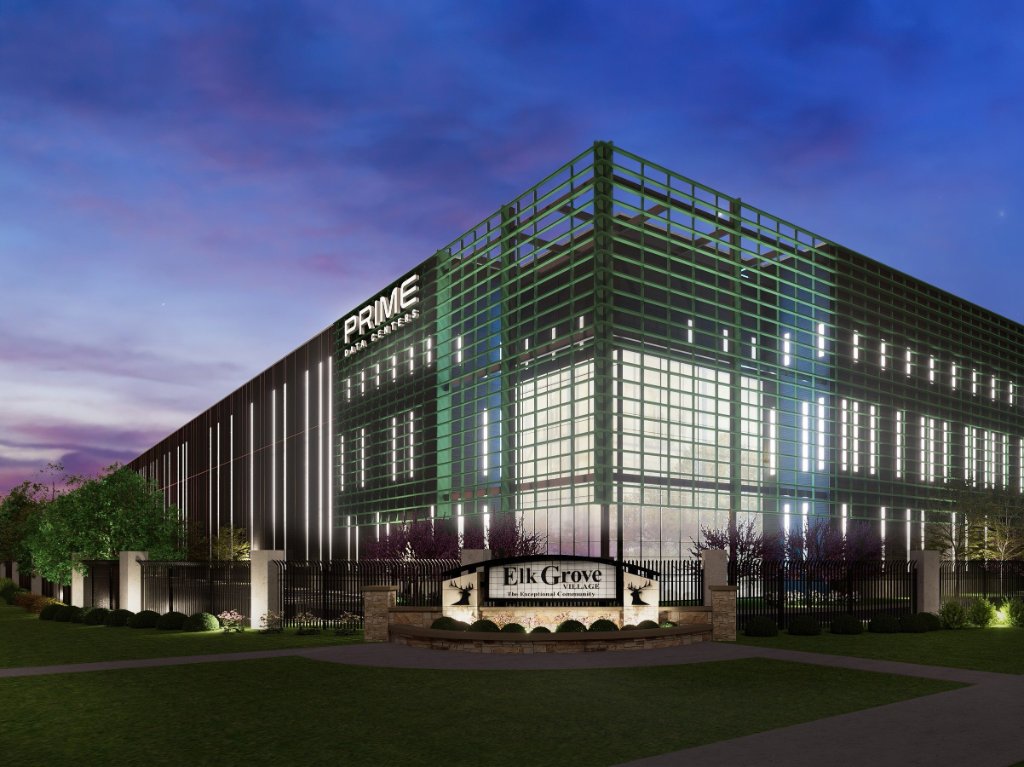
Prime Data Centers - Chicago, IL
Environmental Specification Reference
Continuous protection. Complete documentation.
CLīMIT pays for itself the first time it prevents a callback.
For a data center project, the cost of a single environmental incident, including delayed commissioning, damaged hardware, or a voided warranty claim, can run six figures. CLīMIT's continuous monitoring costs a fraction of that, and delivers a timestamped environmental record that protects every party in the project chain.
Book a 5 minute call with sales
See how CLīMIT helps data center construction teams monitor environmental conditions from groundbreaking through commissioning.