Fireproofing fails when conditions are wrong.
Spray-applied fire-resistive materials are only as reliable as the conditions in which they are applied. Temperature, humidity, and dew point all determine whether your coating bonds, cures, and performs to its rated fire resistance. CLīMIT monitors all three continuously so you spray with confidence and close out with documentation.
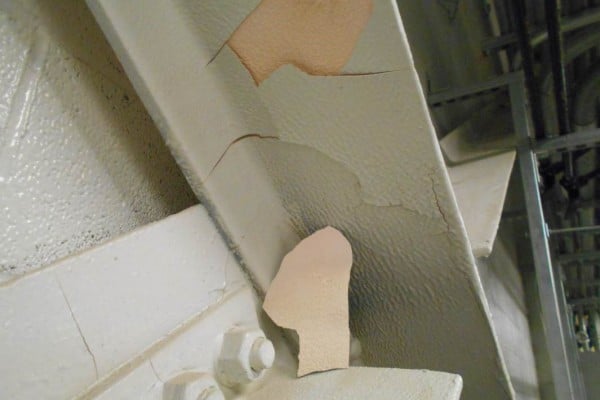
Every fireproofing failure traces back to one of two factors.
Temperature drives the cure and bond. Moisture determines whether the coating adheres to the steel. Get either one wrong and no amount of mix skill or spray technique can save the fire rating.
Ambient & Substrate Temperature
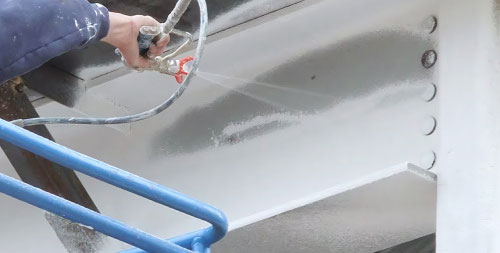
Spray-applied fire-resistive materials (SFRM) including cementitious and gypsum-based products rely on proper temperature to bond to structural steel and cure to their rated density. Too cold and the binder cannot fully hydrate, leaving a soft, powdery coating that delaminates under its own weight. Too hot and the surface skins over before the interior sets, trapping moisture that causes shrinkage cracks and adhesion loss. Steel substrate temperature is equally critical because cold steel pulls heat out of the wet mix and stalls the cure before it ever begins.
Common Failure Modes
Typical Manufacturer Requirements
* Always verify specific requirements with your product manufacturer's technical data sheet.
Relative Humidity & Dew Point
Moisture is the second driver of fireproofing failure. High ambient relative humidity slows evaporation and extends cure time, leaving the coating soft and vulnerable to damage from other trades. When the steel substrate temperature is at or below the dew point, condensation forms on the surface and the SFRM bonds to a film of water instead of steel. The result is adhesion failure that may not be visible until the coating begins to flake off weeks or months later. Low humidity is equally dangerous because it causes rapid surface drying, shrinkage cracks, and a weakened bond line.
Common Failure Modes
Typical Manufacturer Requirements
* Always verify specific requirements with your product manufacturer's technical data sheet.
Intumescent application is where conditions matter most.
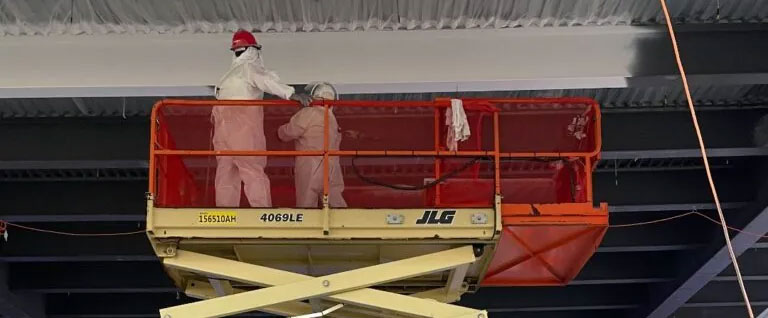
Intumescent fireproofing is the highest-cost coating in the fireproofing trade. It is applied in multiple wet coats over several days to build a finished thickness measured in millimeters, and every coat must dry within a narrow environmental window before the next can go on. One out-of-spec coat and the entire rated assembly has to come off and be reapplied, not just that layer.
That is why intumescent contractors carry the largest exposure on the jobsite. A single humidity spike overnight or a cold substrate on the first coat can void the whole system and trigger a removal and reapplication cost that dwarfs the original installation.
Why Intumescent Failure Is So Costly
Intumescent Manufacturer Requirements
Intumescent systems run tighter temperature and humidity windows than cementitious SFRM, with multi-day cure and recoat windows that must be documented coat by coat.
* Always verify specific requirements with your intumescent manufacturer's technical data sheet. Recoat windows and cure times vary by product and thickness.
CLīMIT documents every coat, every window, every cure.
For intumescent applications, CLīMIT monitors ambient and substrate temperature, relative humidity, and dew point continuously across the full multi-day application. Automatic alerts fire the moment conditions drift outside the recoat or cure window, and timestamped logs document each coat's conditions so your warranty claim is backed by proof, not memory.
The cost of spraying in the wrong conditions.
Full Removal and Reapplication
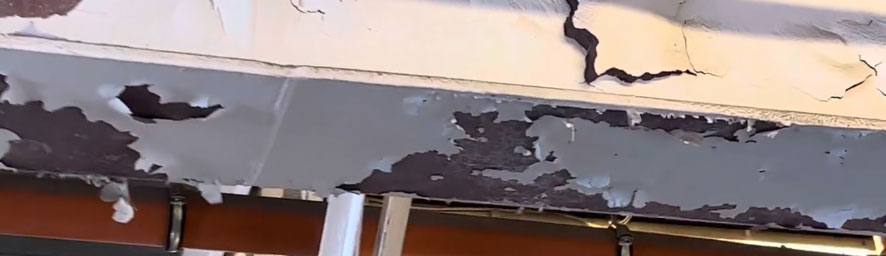
Failed fireproofing cannot be patched to restore a fire rating. The affected area must be scraped or blasted off the steel, the surface re-prepped, and the SFRM reapplied at full thickness. This typically costs 2 to 3 times the original application price.
Voided Manufacturer Warranty
Every major SFRM manufacturer requires documented proof that ambient temperature, substrate temperature, relative humidity, and dew point were within spec during application and cure. Without that data, your warranty claim is denied.
Inspection and Schedule Delays
Building inspectors and special inspectors verify fireproofing thickness and density before signing off. Soft, under-cured, or delaminated coating fails inspection and stops the project until it is corrected and re-inspected.
Liability Without Documentation
If fireproofing fails to perform in a fire event, the GC, owner, and code official will look for proof it was applied within spec. Without timestamped condition logs, liability defaults to the applicator regardless of actual cause.
Know your conditions. Protect your rating.
Defend your warranty.
Spray with confidence. Close out with proof.
See how CLīMIT helps fireproofing contractors document conditions, protect warranties, and eliminate the most common cause of coating failure.