Heat index recording made simple!
- IHIPP Compliance Automation
- Audit-ready reporting
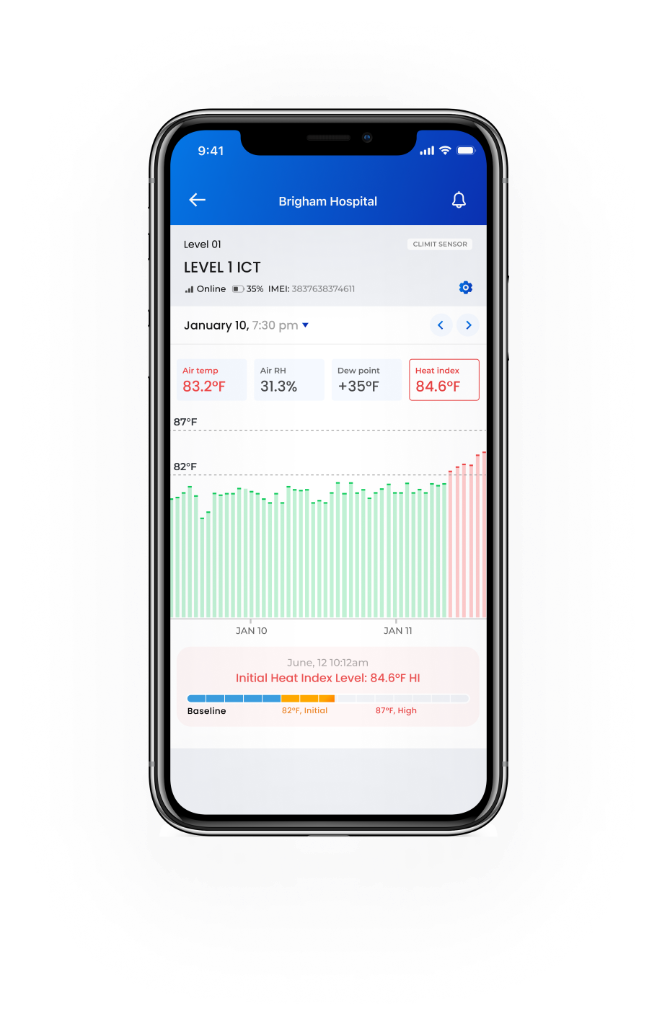
Hourly heat index recording for California construction sites and warehouses with timestamped condition records that support your Cal/OSHA indoor heat illness prevention plan, without Wi-Fi or Bluetooth.

Heat Risk Is Always On. Your Recording Should Be Too.
Heat Stroke
Core body temperature exceeds 104°F -- a life-threatening emergency. Cal/OSHA requires an emergency response plan before conditions reach this level.
Regulatory Exposure
Cal/OSHA conducts targeted inspections during high-heat periods. No written plan, no documentation, and no monitoring can each constitute a citable violation.
Lost Productivity
Heat slows output long before anyone calls a stoppage. Unscheduled breaks, worker absence, and reduced quality push projects off schedule and over budget.
Know What Applies to Your Site
Sourced from Title 8, §3396 (eff. July 23, 2024) · Verify current requirements at dir.ca.gov with trained health and safety experts and qualified legal counsel.
| Setting | Threshold | Regulation | Required Actions (per regulation text) |
|---|---|---|---|
| Indoor / Warehouse — Title 8, §3396 (eff. July 23, 2024) | |||
| Indoor / Warehouse All conditions | 82°F + When employees are present | Title 8, §3396(a)(1) Section applies; basic duties activate |
|
| Indoor / Warehouse Standard workwear | 87°F + (temp) HI 87°F + Either condition activates §3396(e) | Title 8, §3396(a)(2)(A-B) and §3396(e) Full control measure obligations |
|
| Indoor / Warehouse Restrictive clothing or high radiant heat | 82°F + When employees wear clothing restricting heat removal,¹ or work in a high radiant heat area² | Title 8, §3396(a)(2)(C-D) and §3396(e) Same full §3396(e) obligations as 87°F row above |
|
1 Clothing restricting heat removal means full-body coverage (arms, legs, torso) that is waterproof, designed to protect against chemical/biological/physical/radiological/fire hazards, or designed to protect against contamination. Standard workwear made only of knit or woven breathable fibers worn in lieu of street clothing without a vapor barrier is explicitly excluded.
2 High radiant heat area means a work area where globe temperature is 5°F or more greater than dry-bulb temperature (§3396(b)(11)).
Note on IHIPP: The indoor plan (§3396) is formally called the "Indoor Heat Illness Prevention Plan" (IHIPP). Employers must maintain this as a written document in English and any language understood by the majority of employees.
Construction Contractors
Indoor hourly timestamped conditions records to support your §3396 heat illness prevention program
Warehouse & Logistics Operators
Indoor hourly timestamped conditions records to support your §3396 program in distribution centers and 3PL facilities
Safety Consultants & EHS Advisors
Turn written heat illness prevention plans into verifiable, data-backed, hourly recording programs
Quality & Operations Teams
Protect installation quality and warranty conditions during temperature-sensitive work
Cal/OSHA regulations: Title 8, §3395 (Outdoor) · Title 8, §3396 (Indoor, eff. July 2024) · California Dept. of Industrial Relations
Heat Safety -- Automatic, Hourly, Documented.
Cellular-Connected Sensors
Rugged, jobsite-grade sensors with cellular connectivity built in. No Wi-Fi, no gateway, no power hookup. Deploy in minutes anywhere on site.
Monitoring & Documentation Reports
Timestamped condition logs formatted to support your Cal/OSHA recordkeeping and consultant review. Not a substitute for a written HIPP or other required program elements.
Multi-Zone Monitoring
Deploy across large construction sites or warehouse floors with varying conditions. Monitor every zone simultaneously from a single dashboard.
Acclimatization Tracking
Support acclimatization procedures for new and returning workers -- a specific Cal/OSHA requirement under both outdoor and indoor heat standards.
Mobile Field Access
Field supervisors check live conditions and view historical data from any mobile device -- anytime, from anywhere on site.
Historical Trend Analysis
Identify high-risk periods, optimize work schedules, and build a continuous, timestamped record of environmental monitoring over the life of a project.
"CLīMIT turns a written heat illness prevention plan into a verifiable, data-backed recording program -- giving consultants, contractors, and operators a continuous, timestamped record of site conditions without adding manual workload."
Leading California General Contractor
Why monitoring records matter: Cal/OSHA's High Hazard Units conduct targeted inspections in construction and warehouse environments, particularly during high-heat periods. CLīMIT's timestamped logs demonstrate that environmental conditions were measured and tracked. These records can support your team's preparation for inspections and internal safety reviews. CLīMIT is an environmental monitoring tool and is not a substitute for a written Heat Illness Prevention Plan, required training, shade, water, or other program elements required under Cal/OSHA §3395 or §3396.
START RECORDING.
STRENGTHEN YOUR PROGRAM.
Give your crew, your safety team, and your compliance program the hourly visibility they need -- starting today.
CLīMIT is an environmental monitoring tool that records and reports data hourly. Use of CLīMIT does not constitute legal compliance or a substitute for a written Heat Illness Prevention Plan, required training, or other Cal/OSHA program elements. Regulatory thresholds current as of Q2 2025; verify at dir.ca.gov. © 2025 CLīMIT / Construction Connectivity, Inc.